
 뉴스
뉴스
The regular meeting of the National Commission of Turkmenistan for UNESCO was held
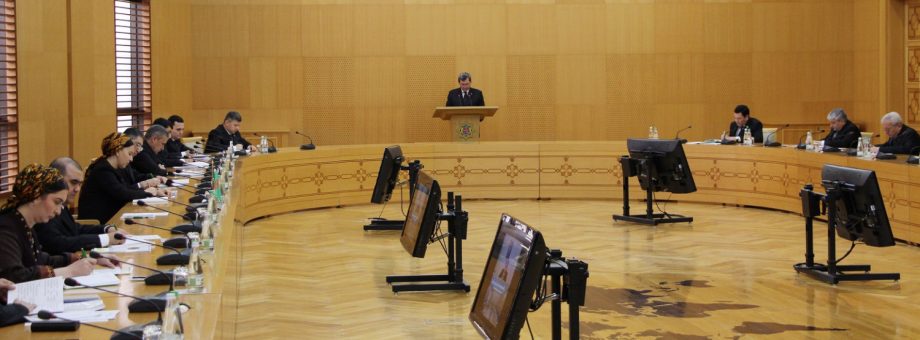
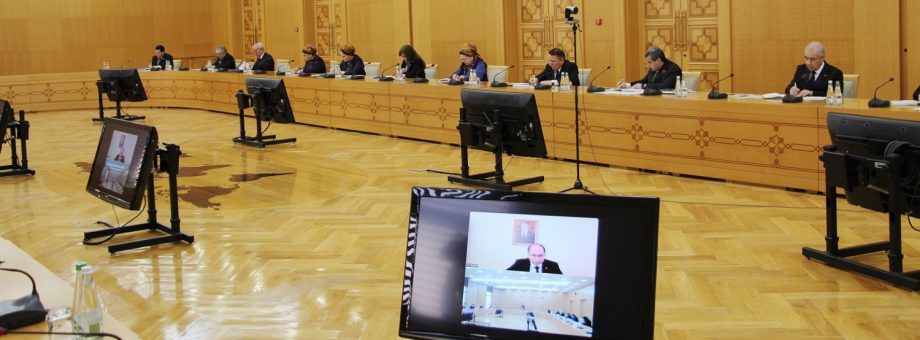
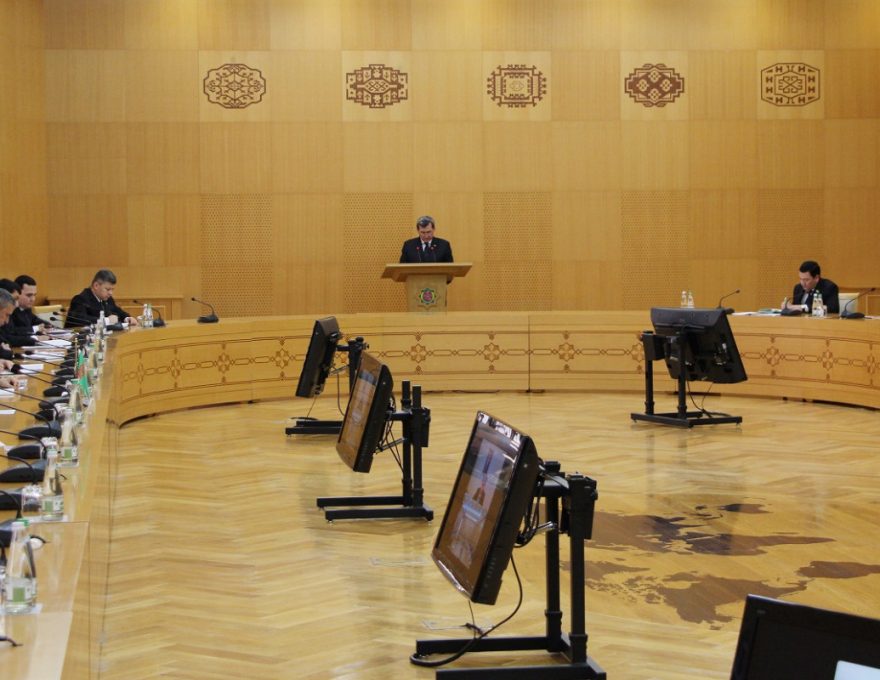
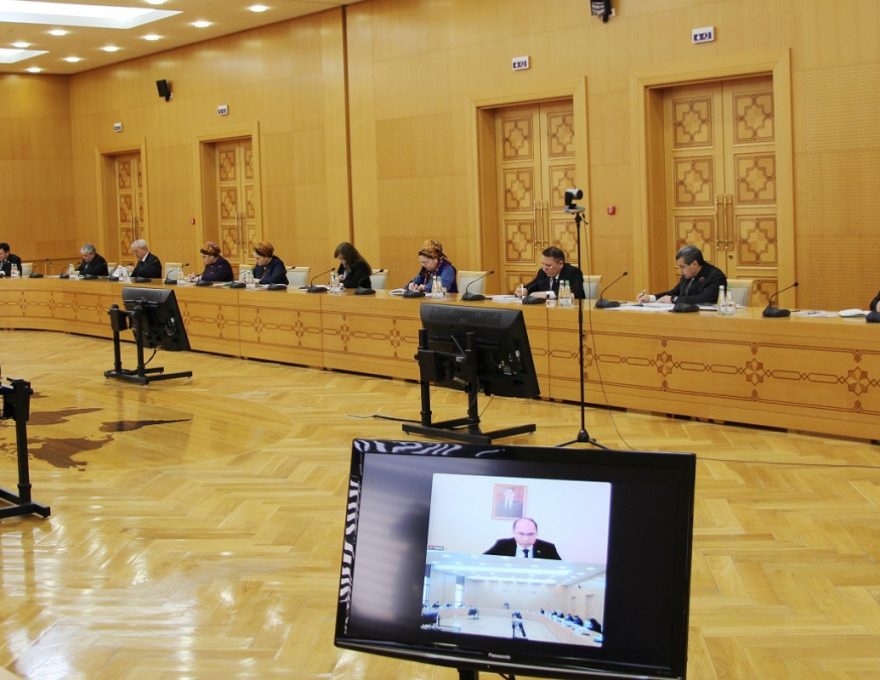
On 21 February 2026, the regular meeting of the National Commission of Turkmenistan for UNESCO took place at the Ministry of Foreign Affairs of Turkmenistan. The meeting was chaired by the Deputy Chairman of the Cabinet of Ministers and Minister of Foreign Affairs of Turkmenistan, Rashid Meredov.
The meeting was attended by relevant Deputy Chairmen of the Cabinet of Ministers of Turkmenistan, heads of профиль ministries and agencies, the Executive Secretary of the National Commission for UNESCO, as well as representatives of scientific institutions and public associations.
In accordance with the approved agenda, participants reviewed the results of the National Commission’s activities for 2025, reports in the fields of culture and science, and discussed the Work Plan for 2026 along with current issues related to the further development of cooperation between Turkmenistan and UNESCO.
During the meeting, it was noted that cooperation with the United Nations Educational, Scientific and Cultural Organization is one of the priority areas of Turkmenistan’s foreign policy, implemented under the leadership of the President of Turkmenistan. In 2025, the work of the National Commission was carried out systematically and consistently within the framework of the approved plan.
Special attention was given to the preservation and promotion of historical and cultural heritage. During the reporting period, “The Art of Breeding the Turkmen Alabay” was inscribed on the Representative List of the Intangible Cultural Heritage of Humanity. Active work also continued on the preparation of multinational nominations, as well as on presenting national heritage within the framework of UNESCO’s Memory of the World programme.
In the fields of science and education, it was noted that the city of Ashgabat was included in the UNESCO Global Network of Learning Cities. A “Digital Science” department was established at the Technology Center of the Academy of Sciences of Turkmenistan within the framework of the UNITWIN programme, and a UNESCO Club was opened at the International University for the Humanities and Development.
In the area of ecology and climate change, the implementation of regional initiatives continued. International consultations and events were held in Ashgabat, and work was carried out to explore the possibilities of including Turkmenistan’s unique natural sites in UNESCO’s international programmes.
During the meeting, issues related to expanding Turkmenistan’s participation in UNESCO’s governing bodies were also considered, including the country’s nomination to the Intergovernmental Committee for the Safeguarding of the Intangible Cultural Heritage for the period 2026-2030.
Summing up the meeting, the participants reaffirmed their commitment to further strengthening constructive cooperation between Turkmenistan and UNESCO in order to promote education, science, culture, sustainable development, and international humanitarian interaction.